The first week
of May was comprised of the Three Hs of weather: hazy, hot, and HUMID! The 90F degree temps were tough enough, but add
in a dew point of 70 and humidity at 55%, and you’ve got a sticky mess! We are
still playing pickleball, though our group has altered playing time to 7 p.m.
rather than 10 a.m. now that the dog days of summer are approaching (though if
you talk to Mom, summer has been here since April!). Speaking of pickleball, the City has approved
the creation of 2 permanent courts!
Since no one is saying exactly when those courts will be completed, my
parents purchased their own package of chalk and pickleball net to accommodate
our growing group.
We find the
longer we remain here in Livingston, the more we get involved in community
service and events. We now volunteer
once weekly for Mannafest, one of the local food pantries in town. Our duties
as stockers include picking up donations at Walmart and Dollar General,
packaging meat based on family size, and keeping the assembly line stocked with
packaged and can goods. It has been a
rewarding experience, and we have met some wonderful folks. The only downside is we must arrive by 6:45 a.m.,
no easy feat!
 |
| Mom stocking the "assembly line" at the Mannafest Food Pantry. |
We attended an
entertaining performance of the East Texas Swing Band at Livingston’s First
Baptist Church, and we continue dancing lessons and going to dances at VFW Post
8658 and other area clubs. We are steady
customers at the Heavenly Fresh booth at a local farmer’s market, where we
purchase farm-fresh eggs and fresh-picked veggies. And, of course, we continue to enjoy the
company of fellow RVers and Escapees.
 |
| Hanging with Escapees Peeps Lisa/Jim, Larry/Robyn/Caleb. |
 |
| Yours truly with John/Carol. |
 |
Dan/Paula and The Parents.
|
Despite
remaining active, being stationary too long gets me a bit antsy. So, we boarded Maximus the Trike for another
multi-day motorcycle trip. Wanting to
complete our history lessons on the battles of the Texas Revolution, our
destination was Goliad, TX. To avoid
Houston traffic, we took the scenic back roads.
We traversed through Sam Houston National Forest and on to TX-90. We stopped to refuel in Anderson, a town of
less than 200 residents but rich in history.
Named for a vice-president of the
Republic of Texas, the town dubs itself, “Where the Republic Lives On”. A nearby field of wildflowers showcases
several structures built during the 1830s and 1840s, giving Anderson a listing
on the National register of Historic Places.

As we traveled
along TX-237 we passed through LaGrange, opting instead to do an in-depth visit
to this Texas town on our return trip.
However, we did make a pitstop shortly thereafter in Hostyn to see Queen
of the Holy Rosary, a beautiful replica of the grotto in France of Our Lady of
Lourdes. This replica grotto was created in 1925 by Czech families who settled in the area. Though only a small, unincorporated area in
Fayette County, the elevated location of Hostyn’s grotto, Catholic Church, and
cemetery offers some lovely views of the Colorado River valley.


We made a short
detour as well to bucolic High Hill, TX, to visit St. Mary’s Church. Built by German and Czech immigrants in 1906,
it is considered to be the “Queen” of the 20 “painted churches” remaining
within the Texas Hill Country. These structures
may look mundane from the exterior, but the term “painted churches” refers to
the elaborate interiors that include vibrant colors, faux marble columns that
look like the real deal, elegant chandeliers, and beautifully-crafted stained
glass windows.
We continued
our journey, passing through Round Top, known for its antique fairs. It is mind-boggling what you can buy
there—from vintage gas station signs to carousal horses, from hand-crafted wood
furnishings to bronze statues. It is a
treasure hunter’s utopia.
 |
| What a find in Round Top! Who doesn't want a giant jackalope for their front yard! |
After a long
and sometimes wet ride, we arrived in Victoria, TX, where we ate a late lunch and checked
in to the Comfort Inn. It is a fairly
new facility near the shopping mall with nicely-appointed rooms, complimentary
breakfast, and very pleasant staff. Its
elevators malfunctioned during our stay, which was no problem to us since we
always take the stairs anyway. But it
was rather scary being awakened from a deep sleep in the middle of the night
when one completely rude and irresponsible patron set off the smoke detectors
when lighting up a cigarette in his/her “no smoking” room. Management was quite apologetic and kindly
added some rewards points to our account for the inconvenience.
After breakfast
the next morning, we traveled the ½ hour to Goliad. We started our tour at Goliad State Park and
Historic Site, utilizing our Texas State Parks Pass. The Park contains the Mission Nuestra Senora del
Espiritu Santo de Zuniga. Established in
1722, it was moved to its present location in 1749. After its secularization in 1830, the Mission
structure deteriorated. The Civilian
Conservation Corps (CCC) worked to reconstruct the Mission from the mid-1930s
until 1941, when its work was halted due to US involvement in World War II. We
explored the Mission and its grounds, imagining the daily lives of the
Franciscan Friars and native Indian cultures who resided within its walls.
 |
| What is left of the The Mission today. |
 |
| Stone wall original to the property. |
 |
| Replica of the original Mission. |
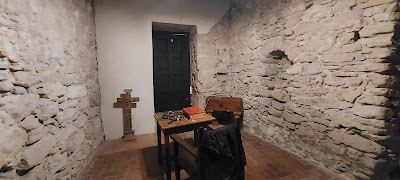 |
| The only room within the Mission with original walls. |
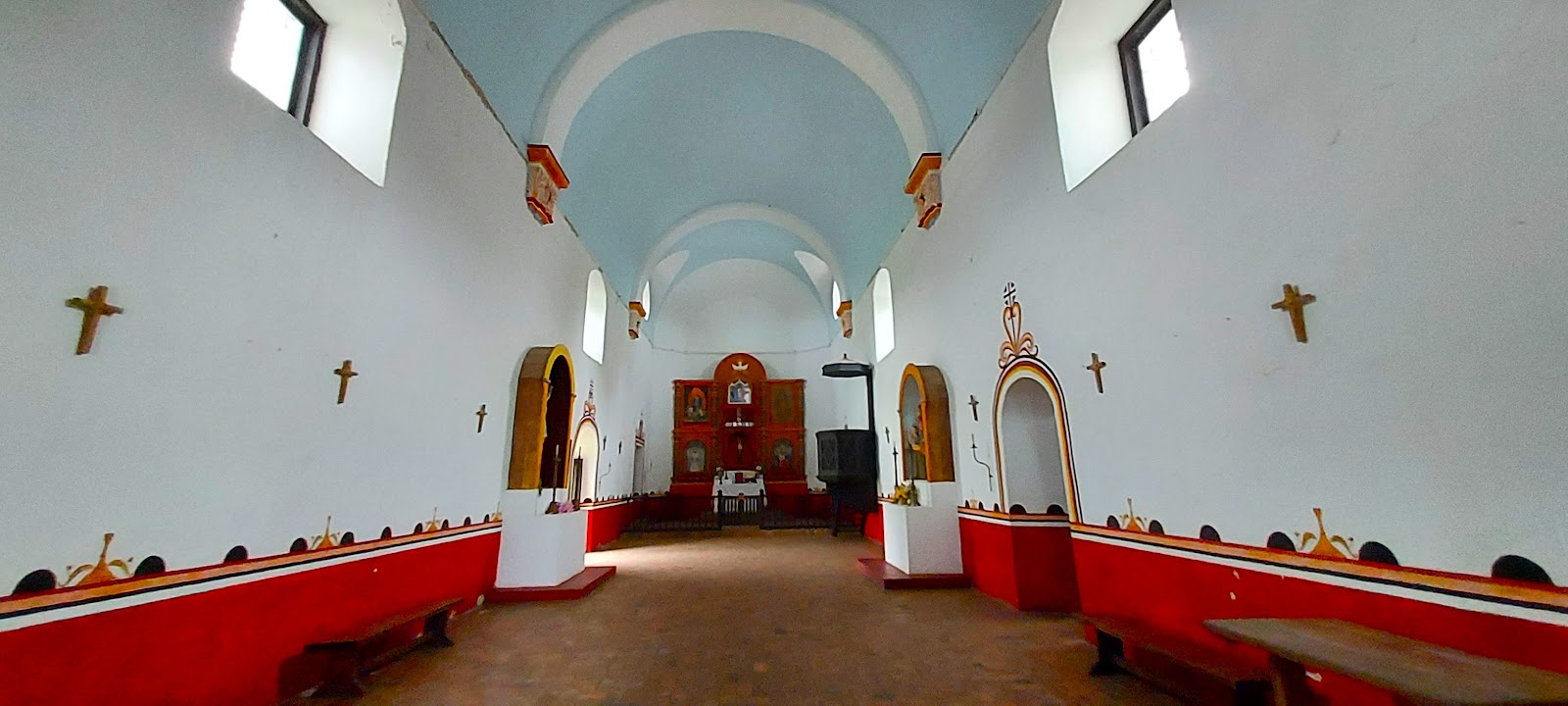 |
| The Mission Chapel. |
 |
| The Chapel alter. |
We checked out
the camping area of the Park and chatted with one of the volunteer hosts. There
were only 2 sites with hookups on which we could fit our set-up
comfortably. We then hiked along Camino
Real de los Tejas, a National Historic Trail, noting how swiftly the San
Antonio River was flowing.
 |
| Colorful wildflower blooms along the Camino Real de los Tejas. |
We visited the
birthplace of General Ignacio Zaragoza at another section of the Park. Who the heck is he? Well, he is the reason for the celebration of
Cinco de Mayo. It was through Zaragoza’s
leadership that his underdog group of soldiers were successful in defeating
Napoleon’s Army from taking over Puebla, Mexico for France on May 5, 1862.
 |
| General Zaragoza--the real reason for Cinco de Mayo. |
We then stopped
at the Presidio la Bahia ($7/adult), where we were greeted by a feline mascot.
Established
at its current location along the San Antonio River in 1749, Presidio la Bahia is considered
one of the finest examples of a Spanish military fort within the U.S. More importantly, it is where a major battle
of the Revolution for Texas’s independence from Mexico occurred. Attacking the fort by surprise during the
pre-dawn hours of October 10, 1835, was a good plan: it resulted in the surrender of the Mexican
troops to the Texans. The fort was now
under the command of Colonel James Fannin, who renamed it “Fort Defiance”.
Colonel Fannin and his troops were not as successful at the Battle of Coleto Creek in Goliad on March 19-20, 1836. They were outnumbered by Santa Ana’s Mexican troops 2 to 1 on this prairie battlefield. Fannin reasoned that by surrendering, he could minimize loss of life. He presumed he and his troops would be treated as prisoners of war. But Santa Ana exhibited his brutality once again. On Palm Sunday, March 27, 1836, he ordered the massacre of every member of Fannin’s troop. This resulted in more loss of lives at Goliad than at the Alamo and San Jacinto combined.
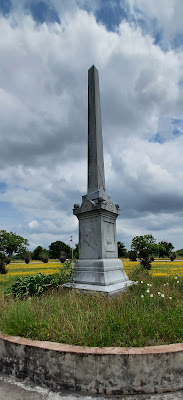
Those that perished at Coleto Creek, including Colonel Fannin, are now interred about ¼ mile away from the Presidio, with a monument commemorating their valor and sacrifice.
While Fannin is
revered by many, others may view him differently. He was a young West Point dropout who
contributed directly to loss of lives in the Texas Revolution, not just at the
Battle of Coleto Creek but also at the Alamo.
Sam Houston had ordered Fannin to lead his troops to the Alamo as
reinforcements. But Fannin waited 3 days
to implement those orders and consequently never made it there to lend any
assistance.
We toured our
Lady of Loreto Chapel at the Presidio, which nearly 3 centuries later, continues
to serve the Catholic community. Lincoln
Borglum, son of famed Mt. Rushmore sculptor Gutzon Borglum, carved the statue
inside of Mother Mary with the Christ Child.
We finished our
visit to Goliad with a walking tour of the town, the highlight being the
“Hanging Tree”, where judicial sentencing occurred “Wild West Style”.
 |
| Maximus parked by the "Hanging Tree" outside the Courthouse. |
We spent the
next day within Victoria. We visited the
County Courthouse. Built in 1892, it is
considered one of the top 10 in Texas.
(While the exterior is quite grand, I thought the interior was rather
mundane).
We also completed a tour of Old Victoria, opting to walk it rather than drive to admire the beautifully restored historic homes. Here is a small sampling of 80+ historic structures within Victoria that we viewed.
 |
| The photo tells the story... |
 |
| The Venable Bland Proctor House, circa 1900. |
 |
| Hill-O'Connor-Howard House, Victorian style, built 1899. |
 |
| Michael Lowery Stoner House, Craftsman style, built 1920. |
Before we knew
it, it was 2 p.m., and we worked up quite an appetite. Chile’s was just 2 miles from our hotel, and
with the skies turning grey with rain clouds, we thought it best to minimize
our driving distance. Anyway, we knew
Chile’s had options for Dad’s plant-based diet.
We sat down, ordered, and were just chillin’ when disaster struck. Dad was removing his eating utensils from
their sleeve when his fork fell towards the floor. In his effort to catch it, he got stabbed by
the steak knife, creating a deep cut right at his knuckle on his index
finger. And being on blood thinners
caused it to bleed profusely. Long story
short: Our sit-down dinner became take-out and Dad
received 5 stitches at a nearby Urgent Care.
Thankfully, it was not his predominant hand and and he was able to drive the trike. (Mom now wants to learn
to ride Dad’s trike, but it requires some training since there are differences
between trikes and motorcycles regarding steering, leaning, and
clutching.) We returned to the hotel
just when it started to rain, and we called it a night.
 |
| Dad all stitched up. |
Unfortunately,
rain was on the menu the next day as we departed Victoria to head home—and it
stayed with us for most of our 4+ hour trek. Even my parents’ Duluth Trading Company raingear could not keep them dry. As for me, by the end of the day, I
had to invest in new raingear—another 3-mil trash bag. Despite this horrible weather, we were
determined to visit Monument Hill and Kreische Brewery Historic Sites
($4/adult) in LaGrange, TX, and it was well worth the stop. The grounds are simply gorgeous, offering
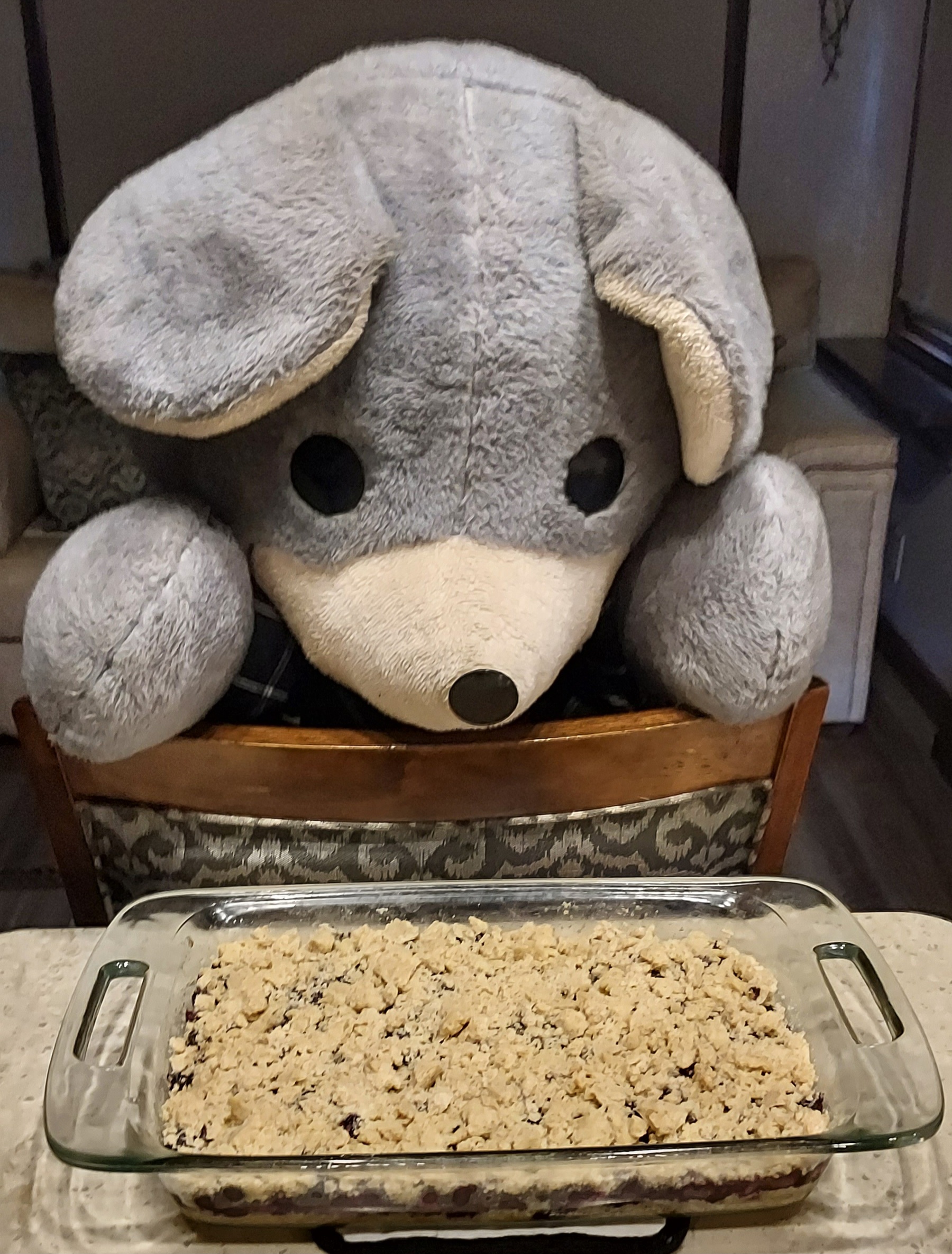
terrific views of the Colorado River. And it sure was nice meeting the Sam the Cat, who was more concerned about staying dry than investigating a stuffed rat.


On
these lands in 1836, Henry Ludwig Kreische, a German immigrant, built his
3-story home. In 1860 he added what
became the third largest brewing operation in Texas. But, unfortunately, his legacy did not
continue after his death in 1882. Though
he and the Mrs. had 6 children, none of them married nor produced any
offspring, and 1 of the 3 sons died at age 36.
Hence, there are only ruins left
of the actual brewery. However, the
family home is in decent condition.
The property also
contains the crypt of the victims of the Dawson Massacre and Mier Expedition. Though Texas won its independence from Mexico
in 1836, Santa Ana continued his efforts to control land between the Rio Grande
and the Nueces Rivers, and the Salado Creek and Mier military conflicts ensued. The expedition under Nicholas Dawson at
Salado Creek (1842) left 36 Texans dead and 15 Texans captured. Furthermore, Texan forces were overcome at Ciudad
Mier (1843), resulting in Texan loss of life and 176 prisoners of war. In
both conflicts, Santa Ana did not act honorably in the rules of warfare. Instead, he ordered all prisoners be killed. His orders were followed at Salado Creek,
but the end result for the Mier prisoners was the killing of 1 out of every 10,
with a bean lottery used to determine which prisoners would perish. So interesting learning the history of Texas!

We took a quick
tour of downtown La Grange and returned to the road. We were wet and tired when we arrived home at
7 p.m., but were grateful to return safely.
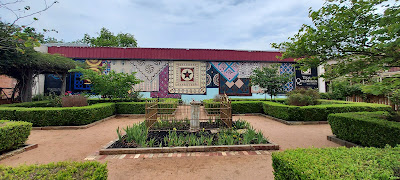 |
| The gardens at the Quilt Museum. |
 |
Built in 1881
by German immigrants, the Casino served as a social venue rather than as a gaming hall.
|
I have lots more to tell you, but I’ve got to run.
I prefer to spend my time having fun instead of writing about it! But I promise to talk to you again soon.